
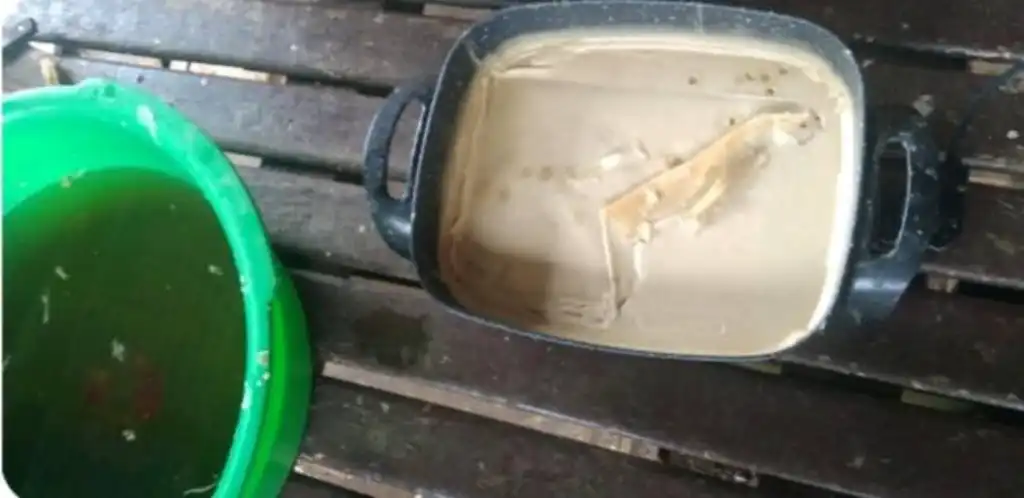
During harvesting, the wax cappings are placed in a piece of porous material such as Sari material and hung up over a clean bucket in a room that bees cannot enter.
The cappings are left overnight in this position so that much of the honey will drip slowly into the bucket.
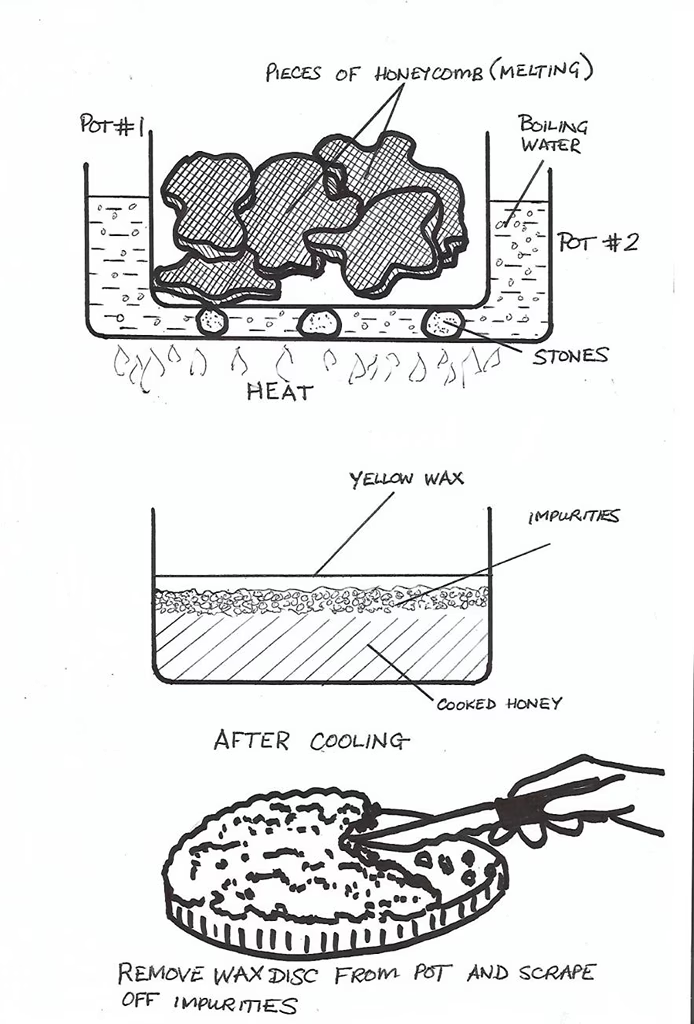
These wax cappings are placed in a pot which is placed inside a second, larger pot of boiling water.
After this process, though, they still contain a fair amount of honey that is stuck to the wax and does not quickly drip off.
These wax cappings are placed in a pot which is placed inside a second, larger pot of boiling water.
The wax will melt and separate into 3 main layers. At the bottom is the honey which is heavier. At the top is the yellow coloured bees’ wax, and in between is a layer of impurities.
After it is fully melted, the pot containing the wax is removed from the heat and allowed to cool.
Once cool, the wax on top can be removed and cleaned. The honey is poured off and strained.
There are those who will buy the wax off you for about $8/kg.
If you have the black plastic frames, you might want to melt some of this wax onto them and brush it over the surface as this helps the bees accept them and build on them as they would a wax foundation.
This is a section from the excellent book:
An Introductory Guide to Beekeeping in the South Pacific
First Edition – Published 1st August 2017
By: Chuck McCay and Emily Strobaugh
- An Introductory Guide to Beekeeping in the South Pacific By Chuck McCay and Emily Strobaugh 1st Edition- DOWNLOAD
- PART 1 – Chuck’s Own Story – Beekeeping in the South Pacific
- PART 2 – Getting Started – Beekeeping in the South Pacific
- PART 3 – Equipment – Beekeeping in the South Pacific
- PART 4a – Apiary Management – How to Move a Hive – Beekeeping in the South Pacific
- PART 4b – Apiary Management – Choosing a Good Location – Beekeeping in the South Pacific
- PART 5a – Identifying Bees – The Fijian Bee – Beekeeping in the South Pacific
- PART 5b – Identifying Bees – Identifying the Three Castes – Beekeeping in the South Pacific
- PART 6a – The Bee Hive – The Annual Hive Cycle – Beekeeping in the South Pacific
- PART 6b – The Bee Hive – Supplemental Feeding – Beekeeping in the South Pacific
- PART 7b – Hive Inspection – How the Hive is Arranged and How the Queen Lays Brood – Beekeeping in the South Pacific
- PART 7a – Hive Inspection – How to Open a Hive and Work Safely – Beekeeping in the South Pacific
- PART 7d – Hive Inspection – What You Will See in a Hive – Beekeeping in the South Pacific
- PART 7e – Hive Inspection – Keeping Hive Records – Beekeeping in the South Pacific
- Part 8a – Identifying Pests – Wax Moth – Beekeeping in the South Pacific
- Part 8b – Identifying Pests – American Foulbrood AFB – Beekeeping in the South Pacific
- PART 9 – Managing Space in the Hive – Beekeeping in the South Pacific
- PART 10 – Weak Hives – Beekeeping in the South Pacific
- PART 11a – Swarming and Splitting – Swarming – Beekeeping in the South Pacific
- PART 11b – Swarming and Splitting – How to Split a Hive – Beekeeping in the South Pacific
- PART 11c – Swarming and Splitting – RAPID SPLIT – 5 frame Nucleus box, 60-70% success – Beekeeping in the South Pacific
- PART 11D – Swarming and Splitting – 30 MINUTE WALK-AWAY SPLIt – Beekeeping in the South Pacific
- PART 12a – Honey – Harvesting Honey – Beekeeping in the South Pacific
- PART 12b – Honey – Handling Used Wax After Harvesting – Beekeeping in the South Pacific
- PART 12c – Honey – Selling Your Honey – Beekeeping in the South Pacific