
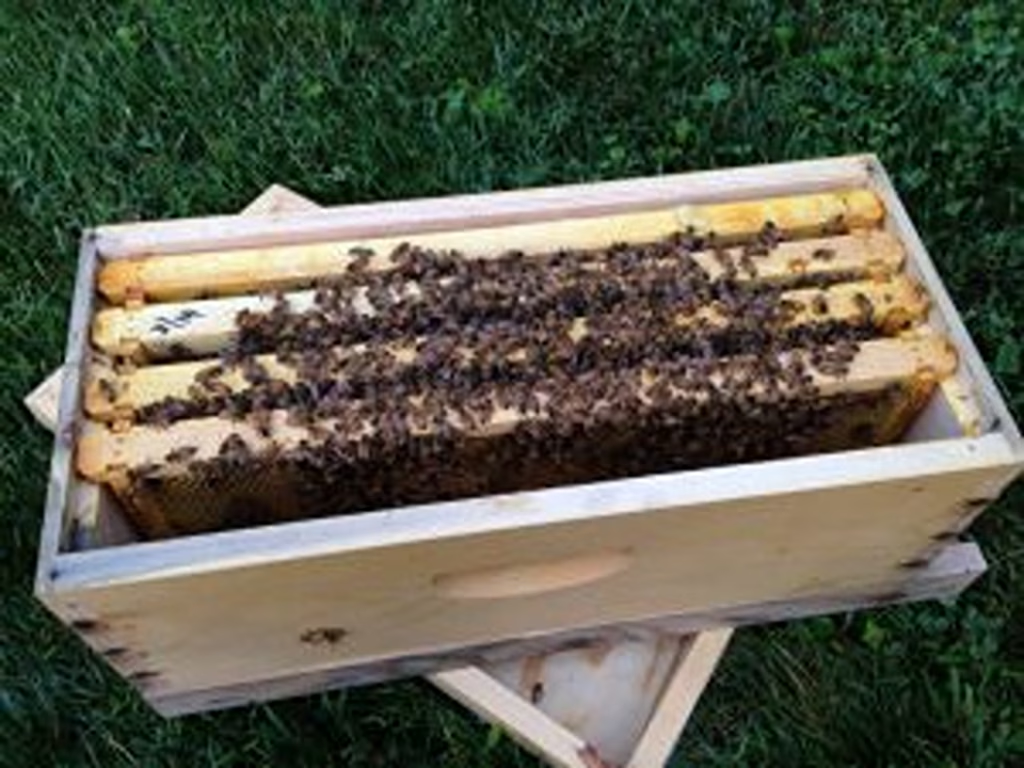
The RAPID SPLIT – 5 frame Nucleus box, 60-70% success
A good hive is chosen (as described in Part 11B).
Three frames containing very young larvae are removed from the parent hive and placed into the centre of a nucleus box.
Before putting these frames into the Nucleus, inspect them and make sure there is no queen on them. Keep all the other bees on them as they will be the Nursing bees.
A frame of pollen and a frame of honey are removed from the parent hive and placed in the Nucleus on the outer edges.
Extra bees are shaken into the Nucleus. Then the lid is placed on the Nucleus.
The parent hive is removed from its position and placed a few metres away into a new location. The Nucleus hive is placed in the empty position where the parent hive had been.
The downfall with this split is that sometimes by mistake, you miss seeing the queen and she ends up in the Nucleus rather than the parent hive.
The queenless parent hive might have no larvae and very few nursing bees to make another queen and therefore die out.
This is a section from the excellent book:
An Introductory Guide to Beekeeping in the South Pacific
First Edition – Published 1st August 2017
By: Chuck McCay and Emily Strobaug
- An Introductory Guide to Beekeeping in the South Pacific By Chuck McCay and Emily Strobaugh 1st Edition- DOWNLOAD
- PART 1 – Chuck’s Own Story – Beekeeping in the South Pacific
- PART 2 – Getting Started – Beekeeping in the South Pacific
- PART 3 – Equipment – Beekeeping in the South Pacific
- PART 4a – Apiary Management – How to Move a Hive – Beekeeping in the South Pacific
- PART 4b – Apiary Management – Choosing a Good Location – Beekeeping in the South Pacific
- PART 5a – Identifying Bees – The Fijian Bee – Beekeeping in the South Pacific
- PART 5b – Identifying Bees – Identifying the Three Castes – Beekeeping in the South Pacific
- PART 6a – The Bee Hive – The Annual Hive Cycle – Beekeeping in the South Pacific
- PART 6b – The Bee Hive – Supplemental Feeding – Beekeeping in the South Pacific
- PART 7b – Hive Inspection – How the Hive is Arranged and How the Queen Lays Brood – Beekeeping in the South Pacific
- PART 7a – Hive Inspection – How to Open a Hive and Work Safely – Beekeeping in the South Pacific
- PART 7d – Hive Inspection – What You Will See in a Hive – Beekeeping in the South Pacific
- PART 7e – Hive Inspection – Keeping Hive Records – Beekeeping in the South Pacific
- Part 8a – Identifying Pests – Wax Moth – Beekeeping in the South Pacific
- Part 8b – Identifying Pests – American Foulbrood AFB – Beekeeping in the South Pacific
- PART 9 – Managing Space in the Hive – Beekeeping in the South Pacific
- PART 10 – Weak Hives – Beekeeping in the South Pacific
- PART 11a – Swarming and Splitting – Swarming – Beekeeping in the South Pacific
- PART 11b – Swarming and Splitting – How to Split a Hive – Beekeeping in the South Pacific
- PART 11c – Swarming and Splitting – RAPID SPLIT – 5 frame Nucleus box, 60-70% success – Beekeeping in the South Pacific
- PART 11D – Swarming and Splitting – 30 MINUTE WALK-AWAY SPLIt – Beekeeping in the South Pacific
- PART 12a – Honey – Harvesting Honey – Beekeeping in the South Pacific
- PART 12b – Honey – Handling Used Wax After Harvesting – Beekeeping in the South Pacific
- PART 12c – Honey – Selling Your Honey – Beekeeping in the South Pacific