
30 MINUTE WALK-AWAY SPLIT- full sized box with an excluder, 70-80% success
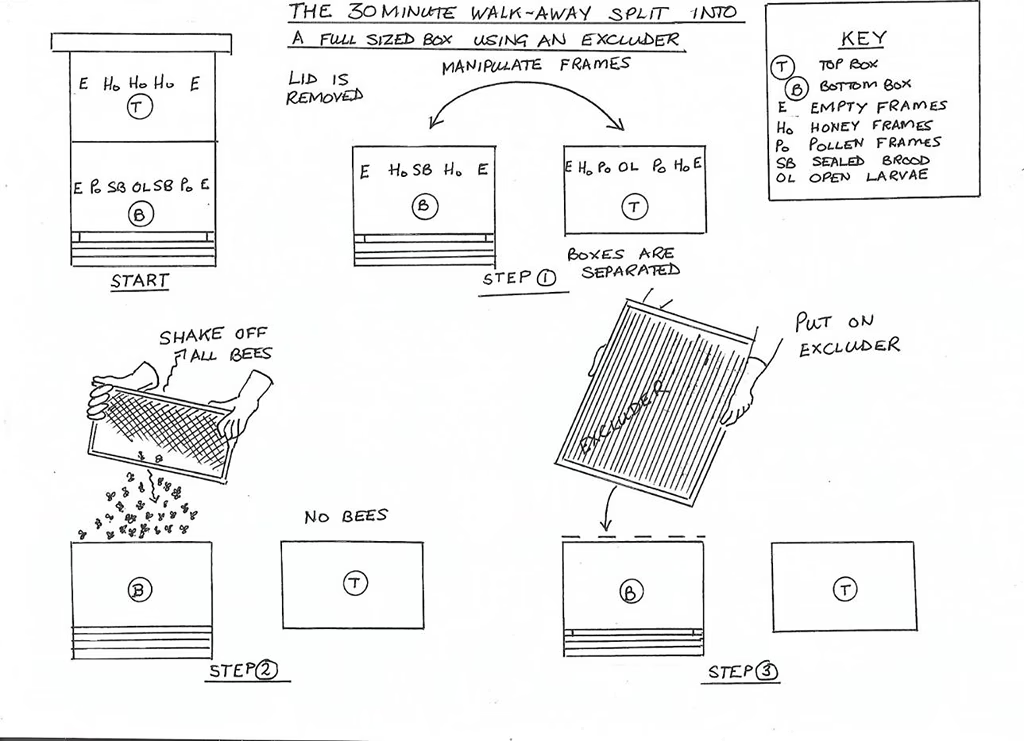
- Remove the super and shake all the bees into the bottom box
- Split the hive with about 40% of brood kept in the parent box and 60% into a new box. Make it such that most of the sealed brood stays in the parent box and all the eggs and open larvae go into the new box.
- Add frames of honey and pollen from the parent box into the new box.
- Shake all the bees into the parent box and place the excluder on top of the parent box.
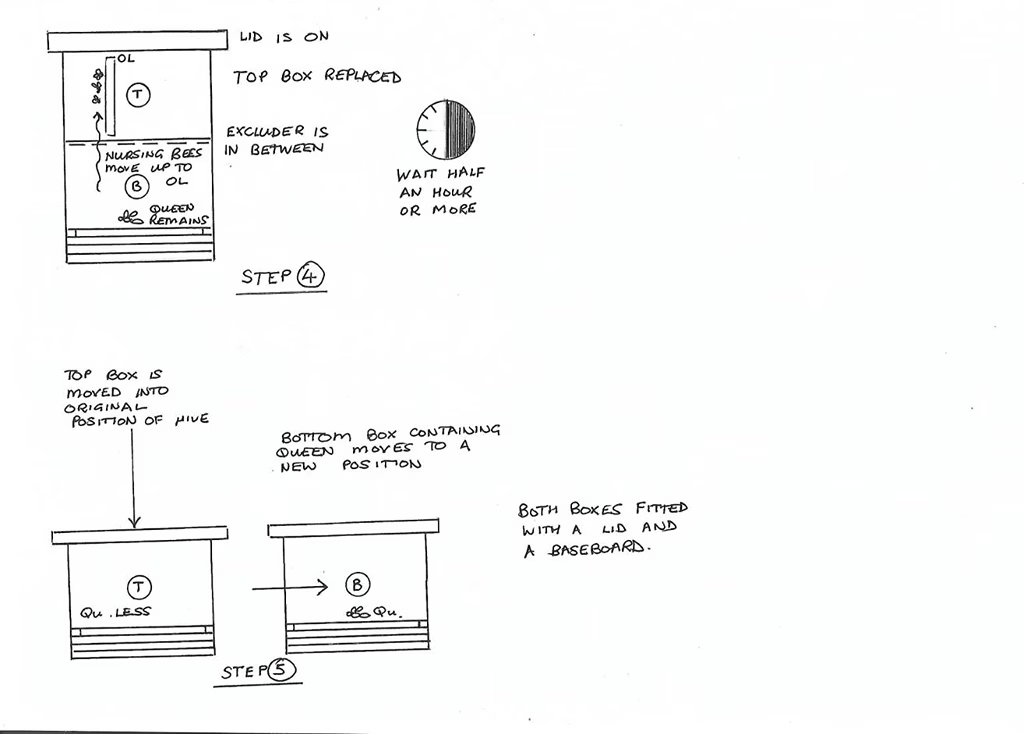
- Put the new box on top of the original box and leave it for half an hour or more. In this time, many of the nurse bees will climb up into the new box to take care of the brood there.
- Place the new, queenless box into the old location and the parent box with the queen into the new location.
- Reduce the entrances to 1/3 or less using newspaper.
Note that if you have an insufficient number of bees, extra nursing bees and brood can be added from a weak box to the new box.
To add nursing bees from another box, simply choose a frame with young larvae on it and shake off the attending bees which will be mostly nursing bees. There is a small chance that some of the bees will fight, but most will be accepted.
The bees in the queenless hive become aware that they have no queen within 15 minutes of a split due to lack of pheromone, and as long as they have a fresh supply of eggs and 2-3 day old larvae, they will start to build queen cells.
The new queen should hatch about 12 days after a split, and within 7 days of hatching, she will go on her maiden flight and be mated.
She should start laying eggs about 3 weeks after the split.
Therefore, check for eggs after 4 weeks.
Four weeks after the split, look for new eggs. If there are no new eggs, the split has failed. If the split fails, put the boxes back together using newspaper between them.
This is a section from the excellent book:
An Introductory Guide to Beekeeping in the South Pacific
First Edition – Published 1st August 2017
By: Chuck McCay and Emily Strobaugh
- An Introductory Guide to Beekeeping in the South Pacific By Chuck McCay and Emily Strobaugh 1st Edition- DOWNLOAD
- PART 1 – Chuck’s Own Story – Beekeeping in the South Pacific
- PART 2 – Getting Started – Beekeeping in the South Pacific
- PART 3 – Equipment – Beekeeping in the South Pacific
- PART 4a – Apiary Management – How to Move a Hive – Beekeeping in the South Pacific
- PART 4b – Apiary Management – Choosing a Good Location – Beekeeping in the South Pacific
- PART 5a – Identifying Bees – The Fijian Bee – Beekeeping in the South Pacific
- PART 5b – Identifying Bees – Identifying the Three Castes – Beekeeping in the South Pacific
- PART 6a – The Bee Hive – The Annual Hive Cycle – Beekeeping in the South Pacific
- PART 6b – The Bee Hive – Supplemental Feeding – Beekeeping in the South Pacific
- PART 7b – Hive Inspection – How the Hive is Arranged and How the Queen Lays Brood – Beekeeping in the South Pacific
- PART 7a – Hive Inspection – How to Open a Hive and Work Safely – Beekeeping in the South Pacific
- PART 7d – Hive Inspection – What You Will See in a Hive – Beekeeping in the South Pacific
- PART 7e – Hive Inspection – Keeping Hive Records – Beekeeping in the South Pacific
- Part 8a – Identifying Pests – Wax Moth – Beekeeping in the South Pacific
- Part 8b – Identifying Pests – American Foulbrood AFB – Beekeeping in the South Pacific
- PART 9 – Managing Space in the Hive – Beekeeping in the South Pacific
- PART 10 – Weak Hives – Beekeeping in the South Pacific
- PART 11a – Swarming and Splitting – Swarming – Beekeeping in the South Pacific
- PART 11b – Swarming and Splitting – How to Split a Hive – Beekeeping in the South Pacific
- PART 11c – Swarming and Splitting – RAPID SPLIT – 5 frame Nucleus box, 60-70% success – Beekeeping in the South Pacific
- PART 11D – Swarming and Splitting – 30 MINUTE WALK-AWAY SPLIt – Beekeeping in the South Pacific
- PART 12a – Honey – Harvesting Honey – Beekeeping in the South Pacific
- PART 12b – Honey – Handling Used Wax After Harvesting – Beekeeping in the South Pacific
- PART 12c – Honey – Selling Your Honey – Beekeeping in the South Pacific