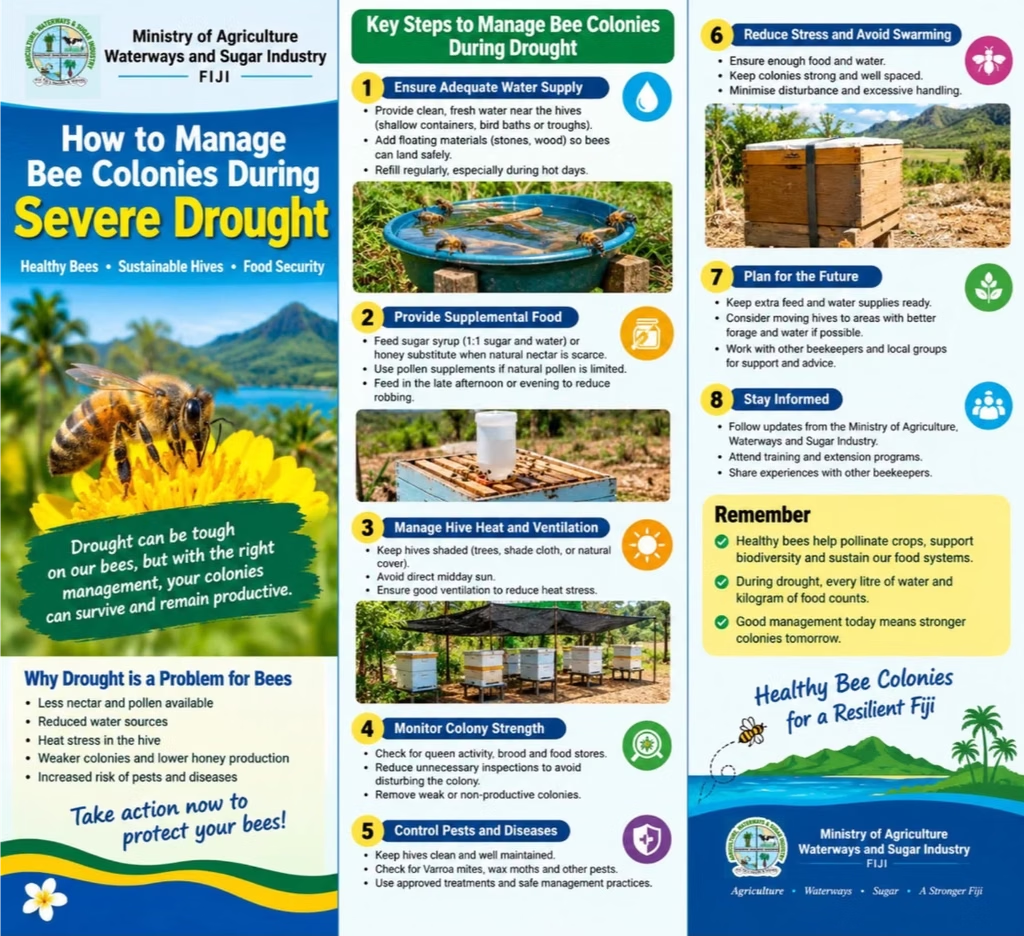
Drought can put bee colonies under stress. The Ministry of Agriculture, Waterways and Sugar Industry shares practical steps to help beekeepers protect their colonies, maintain hive health and prepare for dry conditions.
Take a look at the pamphlet for useful tips to keep your bees healthy and resilient through drought.
Ministry of Agriculture, Waterways and Sugar Industry — Fiji
How to Manage Bee Colonies During Severe Drought
Drought can be tough on our bees, but with the right management, your colonies can survive and remain productive.
Why Drought is a Problem for Bees
- Less nectar and pollen available
- Reduced water sources
- Heat stress in the hive
- Weaker colonies and lower honey production
- Increased risk of pests and diseases
Take action now to protect your bees!
Key Steps to Manage Bee Colonies During Drought
1. Ensure Adequate Water Supply
- Provide clean, fresh water near the hives (shallow containers, bird baths or troughs).
- Add floating materials (stones, wood) so bees can land safely.
- Refill regularly, especially during hot days.
2. Provide Supplemental Food
- Feed sugar syrup (1:1 sugar and water) or honey substitute when natural nectar is scarce.
- Use pollen supplements if natural pollen is limited.
- Feed in the late afternoon or evening to reduce robbing.
3. Manage Hive Heat and Ventilation
- Keep hives shaded (trees, shade cloth, or natural cover).
- Avoid direct midday sun.
- Ensure good ventilation to reduce heat stress.
4. Monitor Colony Strength
- Check for queen activity, brood and food stores.
- Reduce unnecessary inspections to avoid disturbing the colony.
- Remove weak or non-productive colonies.
5. Control Pests and Diseases
- Keep hives clean and well maintained.
- Check for Varroa mites, wax moths and other pests.
- Use approved treatments and safe management practices.
6. Reduce Stress and Avoid Swarming
- Ensure enough food and water.
- Keep colonies strong and well spaced.
- Minimise disturbance and excessive handling.
7. Plan for the Future
- Keep extra feed and water supplies ready.
- Consider moving hives to areas with better forage and water if possible.
- Work with other beekeepers and local groups for support and advice.
8. Stay Informed
- Follow updates from the Ministry of Agriculture, Waterways and Sugar Industry.
- Attend training and extension programs.
- Share experiences with other beekeepers.
Remember
- Healthy bees help pollinate crops, support biodiversity and sustain our food systems.
- During drought, every litre of water and kilogram of food counts.
- Good management today means stronger colonies tomorrow.
Healthy Bee Colonies for a Resilient Fiji
Ministry of Agriculture, Waterways and Sugar Industry — Fiji
Agriculture • Waterways • Sugar • A Stronger Fiji